
- Paintless dent repair (PDR) removes dents by working the metal back into shape from behind or by pulling from the front, without sanding, filler or repainting.
- The core skills are reading the dent with a reflection light, controlling your tools and knowing when to push, pull or blend.
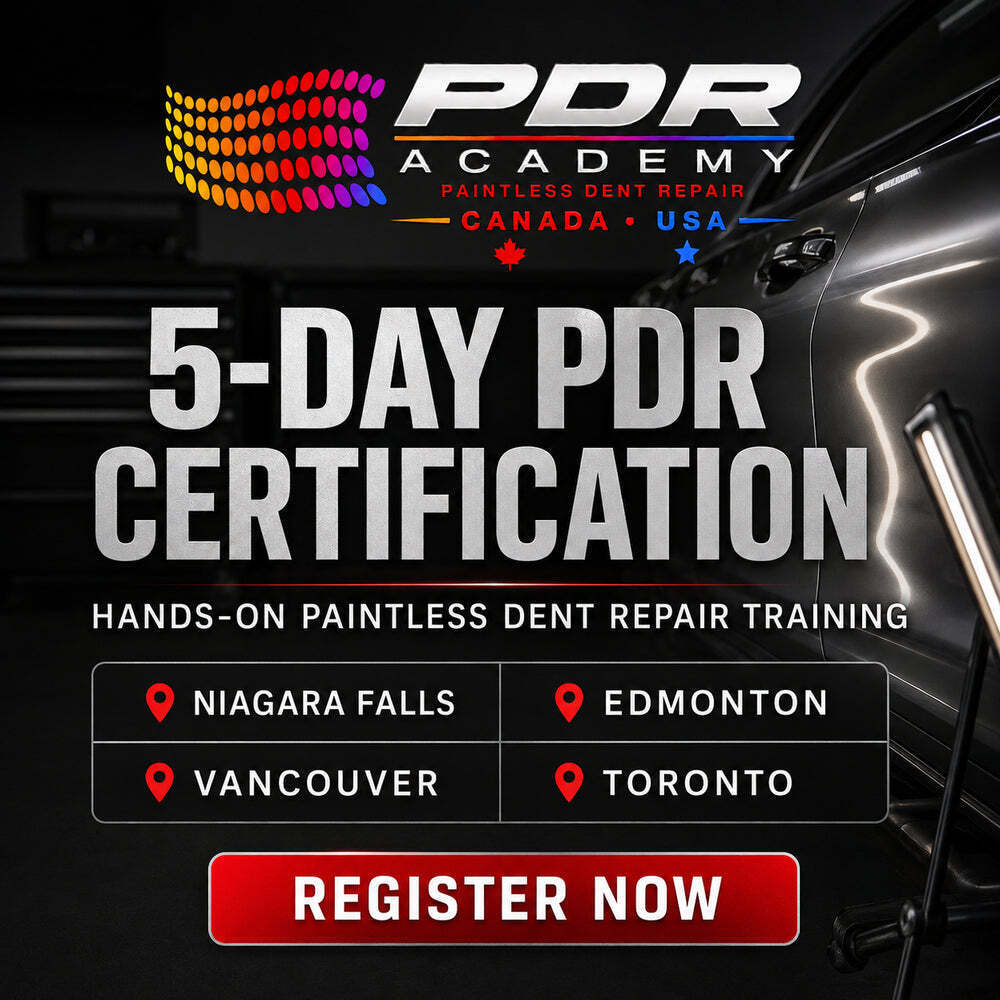
- Tint Academy's PDR course, run with PDR Academy, is 5 full days of hands-on training. No previous experience is required.
Paintless dent repair is a precise, patient skill. Done well, it restores a panel without touching the factory paint. It is used for door dings, creases, hail damage and minor dents on vehicles of all kinds. This guide explains how PDR is learned and what a structured course covers.
What is paintless dent repair?
PDR technicians use specialised rods and tools to massage metal from behind a panel, or glue tabs and pullers to lift a dent from the front. A reflection light or board shows the shape of the dent, so the technician can see exactly where to work. Because the paint is not disturbed, there is no need for filler, sanding or repainting when the repair is suitable for PDR.
Why PDR takes structured training
PDR looks simple on video, but it is easy to make a dent worse. Pushing too hard creates high spots, and working the wrong area can stretch metal. Learning to read the panel, control pressure and blend the repair takes guided practice. That is why our PDR course is five full days instead of two.
The 5-day PDR course, day by day
Our paintless dent repair course is run with PDR Academy, Tint Academy's dent repair program.
- Day 1: PDR fundamentals, panel construction, tools and reflection-light setup.
- Day 2: Dent reading and tool control.
- Day 3: Panel access and glue pulling.
- Day 4: Advanced dents, body lines and crown blending.
- Day 5: Complete repairs, estimating, pricing and PDR business.
What is included
- Professional tools available during the course
- Practice panels and small-group coaching
- Estimating and business training
- Training materials
- A PDR Academy certificate of completion
- Continued support after the course
Key PDR skills explained
Reading the dent
A reflection light or board shows lines across the panel. Where those lines bend, the metal is low or high. Learning to read this is the foundation of every repair.
Tool control
PDR rods come in many shapes and lengths. You learn to place the tip exactly where needed and apply small, controlled pushes rather than force.
Glue pulling
When you cannot reach behind a panel, glue pulling lifts the dent from the outside using tabs, hot glue and a puller. It is a key skill for roof rails, body lines and areas with bracing behind them.
Blending and finishing
After the dent is lifted, a technician taps down high spots and blends the area until the reflection runs straight again.
Estimating
Customers want a price before you start. Estimating teaches you to judge size, depth, location and access, and to explain when a dent is not a good candidate for PDR.
Who PDR training suits
- People starting a new trade who enjoy detailed, patient work.
- Detailers, tinters and PPF installers who want to offer dent repair to existing customers.
- Dealership and body shop staff who want an in-house skill.
If you already tint or install PPF, see how PDR compares in our PPF training guide, and read how added services affect earning potential.
Where PDR classes run
PDR classes have been scheduled in Vancouver (Surrey), British Columbia and Toronto (Holland Landing at the Jax Wax Factory Store), Ontario. Check the PDR course page for current dates. Before you book, you can also read the free PDR opportunity guide on career paths.
When PDR is and is not the right repair
Part of a technician's job is knowing when PDR will work. It is usually suited to dents where the paint is intact and the metal has not been stretched too far. Dents with cracked or chipped paint, very sharp creases, or damage on panel edges may need conventional body work instead. Being honest with customers about this builds trust and protects your reputation.
What to practise after the course
- Small, round dents on flat panels to build tool control.
- Reading the light from different angles until you can see small highs and lows.
- Glue pulling on practice panels to learn tab placement and pull strength.
- Blending until the reflection runs straight with no visible marks.
- Timing yourself so you can estimate jobs accurately.
Building a PDR business
PDR can be offered as a mobile service, from a shop, or alongside detailing, tint or PPF. Common sources of work include individual car owners, dealerships preparing used vehicles for sale and, in some regions, seasonal hail damage. As with any trade, consistent quality, clear estimates and reviews drive growth.
Tools you will use
PDR uses a specialised set of tools. During the course, professional tools are available for you to use, so you can learn what each one does before buying your own. Common tools include:
- PDR rods in different lengths, shapes and tip styles for reaching behind panels
- Reflection lights or boards to read the dent
- Glue pulling kits with tabs, hot glue and pullers
- Tap-down tools and knockdowns to level high spots
- Window guards and panel protection so you do not damage glass or trim while working
Learn paintless dent repair
Five full days of hands-on training with PDR Academy. Call or text Canada: 289-201-2070.
Frequently asked questions
How long does it take to learn paintless dent repair?
The Tint Academy PDR course is five full days of hands-on training. Building speed and handling harder dents takes continued practice after the course.
Do I need experience for the PDR course?
No previous paintless dent repair or automotive experience is required.
What is glue pulling in PDR?
Glue pulling lifts a dent from the outside of the panel using glue tabs and a puller. It is used when you cannot reach behind the dent.
Do I get a certificate for PDR training?
Yes. Students receive a PDR Academy certificate of completion.