
- PPF is a clear, thick urethane film that protects paint from stone chips, scratches and road debris.
- Installing it well takes a different set of skills from tint: stretching, tension control, edge wrapping and working around body lines.
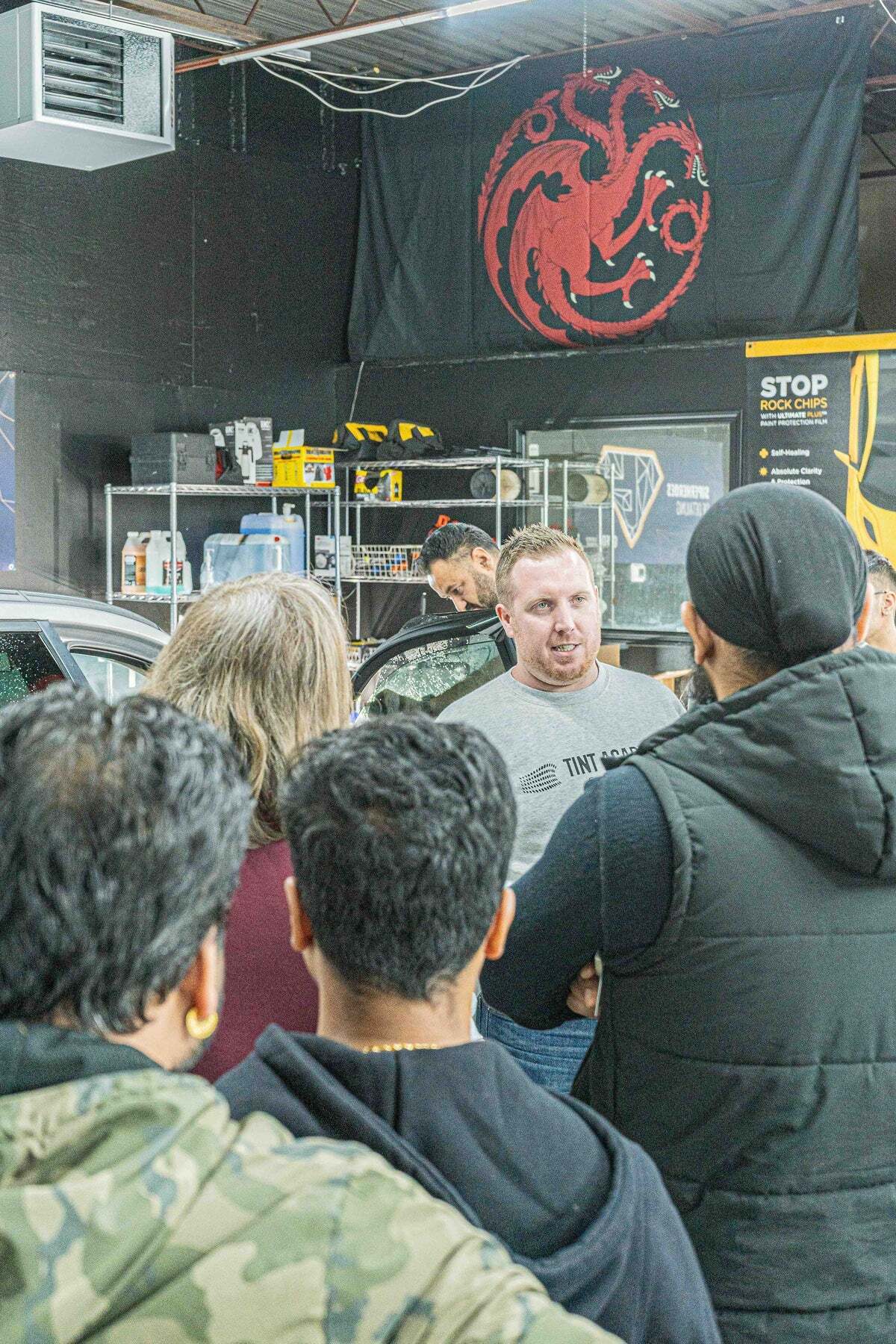
- Tint Academy's PPF course is 2 days of hands-on training on real vehicles. No previous PPF experience is required.
Paint protection film has become a standard service at many detail, tint and wrap shops. Customers with new or high-value vehicles want their paint protected, and they often ask the shop they already use for tint or detailing. If you are thinking about learning PPF, this guide covers what the training involves and who it suits.
What is paint protection film?
PPF is a transparent film applied to painted surfaces. It acts as a sacrificial layer that takes the impact of stone chips, light scratches, bug acids and road debris instead of the paint. Many modern films have a self-healing top coat that lets light swirl marks fade with heat. It is usually installed on high-impact areas such as the front bumper, hood, fenders and mirrors, or on the full vehicle.
How PPF differs from window tint
| Window tint | PPF | |
|---|---|---|
| Surface | Glass | Painted body panels |
| Main skill | Heat shrinking and contamination control | Stretching, tension and edge wrapping |
| Film | Thin, applied to inside of glass | Thicker urethane, applied to outside of paint |
| Typical job | Full vehicle in a few hours | Partial front or full vehicle, often longer |
Tinters often find PPF a natural next step because they already understand slip solutions, squeegee technique and clean working habits. But PPF needs its own training: the film is thicker, it stretches, and mistakes on paint are very visible.
What a PPF course should teach
Our 2-day PPF course covers:
- Surface preparation and paint decontamination
- Slip and tack solution setup
- Bulk PPF and pre-cut pattern installation
- Stretching, tension and film control
- Edge wrapping, corners and body lines
- Mirror, hood, fender and bumper installs
- Troubleshooting, pricing and selling PPF
Who PPF training suits
- Window tint installers who want to offer more to the same customers.
- Detailers whose clients already ask about paint protection and ceramic coating.
- Vinyl wrap installers who are comfortable with stretching film around panels.
- Auto restyling shops adding a protection service.
- New entrepreneurs who want to start in automotive protection.
No previous PPF experience is required for our course.
Bulk film vs. pre-cut patterns
There are two main ways to install PPF. Pre-cut patterns are cut by a plotter using software for each vehicle model, which reduces cutting on the car. Bulk installation means working from a larger piece of film and trimming on the vehicle, which allows custom wrapped edges but needs more skill and care around paint. A good course teaches both so you can choose what fits each job.
Common beginner mistakes
- Poor prep. Contamination under PPF is very visible on glossy paint.
- Overstretching. Too much tension can cause the film to lift or show distortion later.
- Weak edges. Edges that are not properly wrapped or sealed lift over time.
- Rushing corners. Bumpers and mirrors need patience and planning.
Can I learn tint and PPF together?
Window tint and PPF are separate certification courses. In some cities they run back to back, so you can plan both in one trip. Contact our team to plan both, or start with the window tint course and add PPF once your tint work is consistent. If you are deciding between skills, our guide to what tinters earn covers how added services raise the value of each customer.
Where PPF training runs
PPF dates are added regularly in cities such as Toronto, Nashville and Vancouver, among others. Check the PPF course page or call or text us for the next class near you.
What to practise after a PPF course
As with tint, speed and quality in PPF come from repetition. After training, focus on:
- Smaller panels first. Mirrors and door cups teach stretching and edge control on a small scale.
- Hoods and fenders. Larger, flatter areas teach you to manage film across a wide surface.
- Bumpers last. Complex curves and sensors take the most planning.
- Inspect in strong light for contamination, lifted edges and stretch marks.
Selling PPF to customers
Many car owners have heard of PPF but do not know how it works. Being able to explain it clearly helps you sell it honestly:
- Explain which areas are most exposed to chips and why they are covered first.
- Show the difference between partial front coverage and full-vehicle coverage.
- Explain care instructions and what the film can and cannot protect against.
- Talk about how PPF can work alongside ceramic coating and tint.
PPF and window tint together
Many shops offer tint and PPF as a package, especially for new vehicles. Customers who trust you with their windows are often happy to have their paint protected by the same shop. Adding PPF can raise the value of each customer without needing to find new ones. If you have not learned tint yet, start with how to become a window tinter.
Questions to ask before booking a PPF course
- Will I install on real vehicles or only on practice panels?
- Does the course cover both bulk film and pre-cut patterns?
- Which panels will I install: mirrors, hood, fenders, bumpers?
- Is pricing and selling PPF covered?
- What support is available after the course?
Add PPF to your services
See PPF course details, or call or text Canada: 289-201-2070 or USA: 321-364-9518.
Frequently asked questions
How long is PPF training?
The Tint Academy paint protection film course is 2 days of hands-on training on real vehicles.
Do I need experience to learn PPF?
No. No previous PPF experience is required. The course suits tinters, detailers, wrap installers, restyling shops and new business owners.
Is PPF harder than window tint?
It is different. PPF relies on stretching, tension control and edge wrapping on painted panels, while tint relies on heat shrinking and contamination control on glass.
Can I take window tint and PPF training together?
They are separate courses, but in some cities they run back to back. Contact Tint Academy to plan both.